
We’ve all experienced it: the excitement of starting a new habit — whether it’s exercising, eating healthier, or journaling — followed by the frustration of falling back into old patterns. The question is, why do we struggle so much to change habits, even when we know what’s good for us?
The answer lies in psychology. Habits are not just about willpower; they’re deeply wired into the brain. Understanding how habits are formed and why they resist change is the first step toward transforming them.
What Are Habits, Really?
A habit is an automatic behavior triggered by a specific cue. Neuroscientist Ann Graybiel of MIT discovered that habits are stored in the basal ganglia, the brain region responsible for patterns and routines. Once a habit is established, the brain “saves energy” by running it on autopilot.
This explains why you can drive home without consciously thinking about every turn or why you reach for your phone first thing in the morning without deciding to.
Image suggestion: A realistic illustration of a human brain with the basal ganglia highlighted, showing how habits are neurologically stored.
The Habit Loop: Cue, Routine, Reward
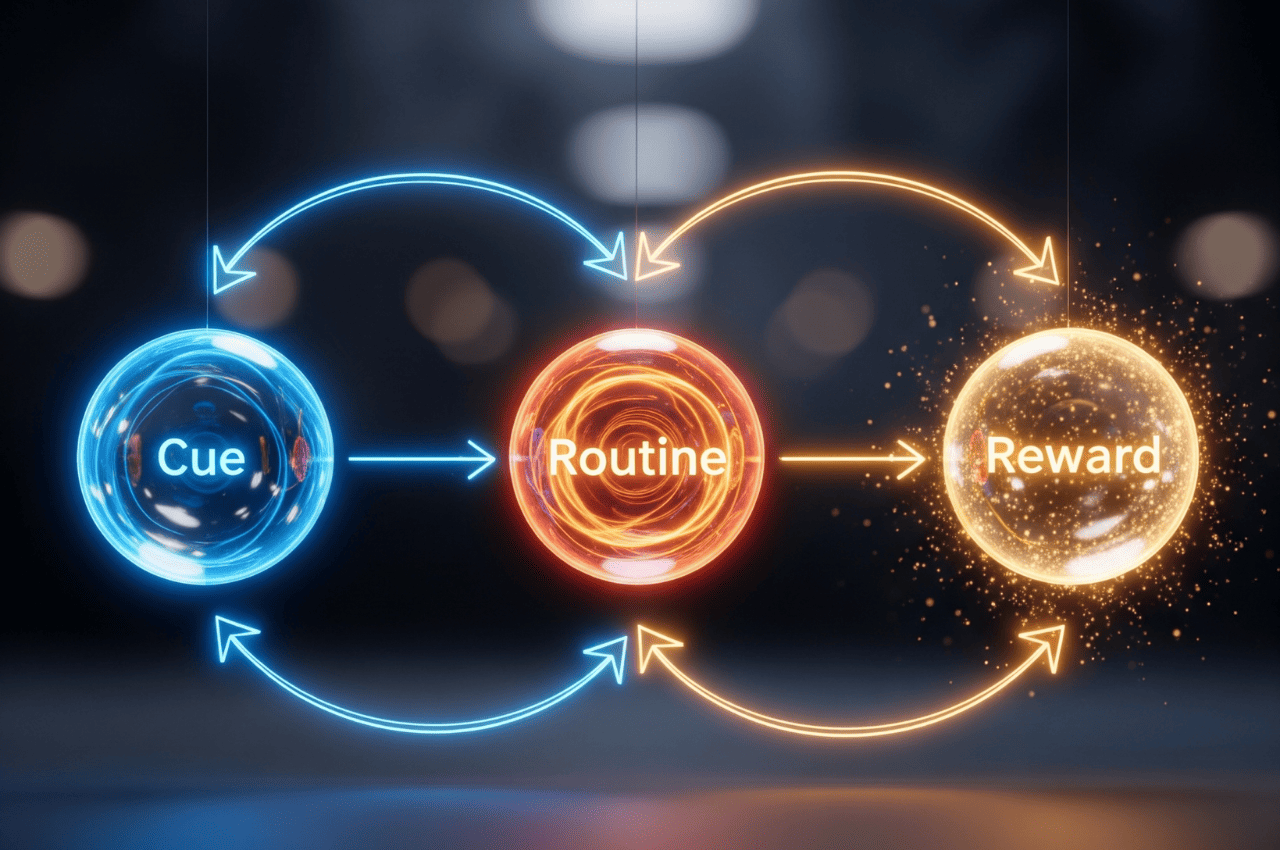
Charles Duhigg, in his book The Power of Habit, describes habits as a loop of three elements:
- Cue – the trigger that starts the habit (feeling stressed, seeing your phone, smelling coffee)
- Routine – the behavior itself (smoking, scrolling, drinking coffee)
- Reward – the benefit your brain receives (stress relief, entertainment, alertness)
The stronger the association between cue and reward, the harder it is to break the cycle.
Practical example: If every time you’re stressed (cue), you eat sweets (routine), your brain links sugar with relief (reward). Over time, the habit strengthens, even if you consciously want to stop.
Image suggestion: A flow diagram showing the habit loop: Cue → Routine → Reward.
Why Bad Habits Are Harder to Break
Our brains are wired for survival, not long-term optimization. That means we prioritize immediate rewards over distant ones. Eating junk food feels rewarding now, while the benefits of eating healthy take weeks or months to notice.
According to a study published in Neuron, dopamine spikes not from the reward itself but from the anticipation of the reward. This makes bad habits extremely sticky, because the brain learns to crave the expectation.
The Role of Environment in Habit Formation
Psychologist Wendy Wood found that 40–50% of daily actions are habitual. Most of these are triggered not by conscious thought but by environment.
- If you keep your phone on your desk, you’ll check it more often.
- If you keep junk food in the house, you’ll eat it.
- If your gym clothes are ready the night before, you’ll likely exercise.
This is why changing habits often requires changing surroundings.
Image suggestion: A realistic photo of a messy desk with a phone buzzing and snacks nearby, contrasting with a minimalist desk setup with water and a notebook.
Why Willpower Alone Doesn’t Work
Many people fail at changing habits because they rely solely on willpower. But as research by Roy Baumeister shows, willpower is a limited resource. It’s like a muscle: it gets tired with overuse.
Instead of fighting bad habits head-on, psychologists suggest strategies like:
- Habit replacement: Swap the routine but keep the cue and reward (e.g., chew gum instead of smoking when stressed).
- Habit stacking: Attach a new habit to an existing one (e.g., meditate right after brushing your teeth).
- Reduce friction: Make good habits easier (place fruit on the counter) and bad ones harder (delete social media apps).
The Emotional Side of Habits
Habits are not purely logical. They are deeply tied to emotions. Stress, boredom, and loneliness often trigger unhelpful habits because they provide comfort.
For example, emotional eaters don’t necessarily crave food — they crave relief from negative feelings. That’s why developing emotional awareness is key to lasting change. Practices like mindfulness and journaling help identify emotional triggers before they spiral into automatic habits.
Image suggestion: A person journaling by hand in a quiet, cozy environment, showing reflection and self-awareness.
The Science of Building Better Habits
If bad habits are sticky, the good news is that positive ones can be formed using the same brain mechanisms. Here are key principles backed by science:
- Make it obvious: Place visual cues (post-its, reminders, gym bag by the door).
- Make it attractive: Pair habits with something enjoyable (listen to your favorite podcast while running).
- Make it easy: Start so small it feels silly (2 push-ups instead of 30).
- Make it satisfying: Track progress with apps or habit journals — celebrating small wins builds momentum.
This strategy comes directly from James Clear’s habit framework, which has helped millions of readers worldwide.
Real-Life Application: Breaking Phone Addiction
Let’s apply the psychology of habits to a modern problem: excessive phone use.
- Cue: Boredom, notification sound, or phone in sight.
- Routine: Unlocking the phone and scrolling endlessly.
- Reward: Entertainment, dopamine hit, distraction from stress.
How to break the cycle:
- Silence notifications and remove distracting apps from the home screen (reduce cues).
- Replace the routine: when bored, pick up a book or take a walk.
- Keep the reward: still enjoy relaxation, but in a healthier form.
Image suggestion: A realistic photo of a smartphone face down on a table with a book beside it, symbolizing choice.
Why We Struggle to Change: The Bottom Line
We struggle to change habits because they are deeply ingrained in the brain, fueled by immediate rewards, shaped by environment, and reinforced by emotions. It’s not a lack of motivation or weakness — it’s biology and psychology at work.
The good news? By working with your brain instead of against it, you can create lasting change. The key is not to fight habits head-on but to reshape the loop, adjust the environment, and anchor new behaviors to existing ones.
Action step: Pick one habit you want to change. Write down its cue, routine, and reward. Then brainstorm a healthier routine that delivers the same reward. Start today with just one small shift.