
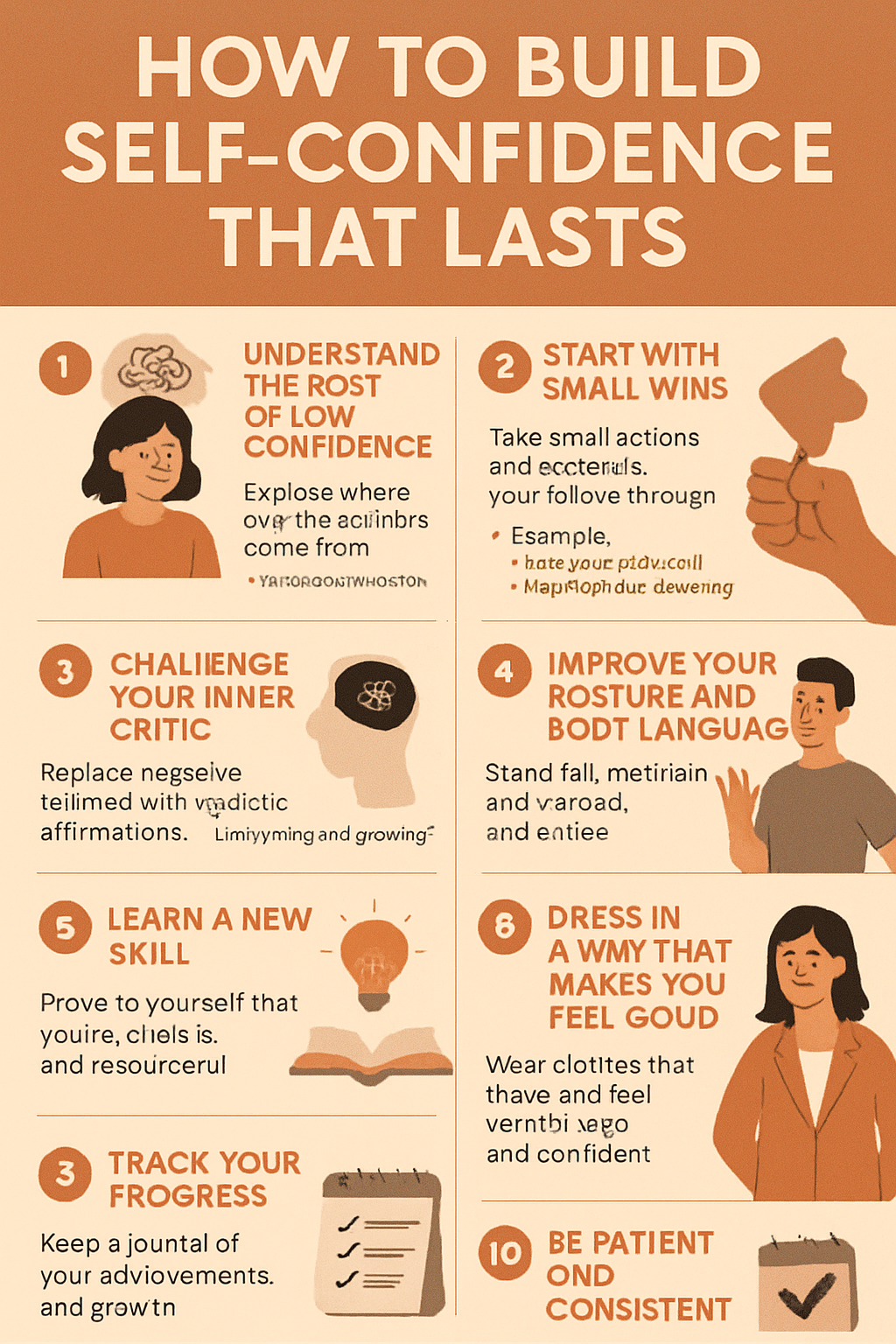
Self-confidence isn’t something you’re born with or without — it’s something you build, nurture, and strengthen over time. It’s not about being loud or fearless, but about trusting yourself and your ability to handle life’s challenges.
In this article, you’ll learn how to develop genuine, lasting self-confidence, even if you currently struggle with self-doubt or insecurity.
What Is Self-Confidence?
Self-confidence is the belief in your own value, skills, and judgment. It allows you to:
- Speak up for yourself
- Take risks without fearing failure
- Handle criticism constructively
- Pursue your goals with courage
True confidence is quiet and grounded — it doesn’t need validation or comparison. It comes from within.
Why Self-Confidence Matters
Confidence impacts almost every area of your life:
- In relationships: You set boundaries and attract healthier connections.
- At work: You go after opportunities and communicate more effectively.
- With yourself: You make decisions aligned with your values and dreams.
When you believe in yourself, you show up more fully in the world.
Step 1: Understand the Root of Low Confidence
Before building confidence, it helps to explore where your self-doubt comes from. Common sources include:
- Childhood criticism or unrealistic expectations
- Comparing yourself to others
- Fear of failure or rejection
- Perfectionism
Identifying your patterns is the first step to rewriting them.
Step 2: Start With Small Wins
Confidence grows from action, not overthinking. Start by doing small things that challenge you — and celebrate when you follow through.
Examples:
- Making that phone call you’ve been avoiding
- Speaking up in a meeting
- Going out alone to a café or event
- Finishing a task you’ve procrastinated
Each time you take action, you send yourself the message:
“I can trust myself to show up.”
Step 3: Challenge Your Inner Critic
We all have a voice in our head that says things like:
- “You’re not good enough.”
- “You’ll embarrass yourself.”
- “You’ll fail, so why try?”
You can’t eliminate this voice completely, but you can stop believing it. Start by questioning it:
- Is this thought 100% true?
- Would I say this to a friend?
- What’s a more helpful perspective?
Replace it with realistic affirmations:
- “I’m learning and growing every day.”
- “I have something valuable to offer.”
- “I can handle whatever comes my way.”
Step 4: Improve Your Posture and Body Language
Your body and mind are deeply connected. By adjusting your posture, you can actually boost confidence internally.
Tips:
- Stand tall with shoulders back
- Maintain eye contact
- Avoid crossing arms defensively
- Smile gently — it relaxes your nervous system
Try the “power pose” for 2 minutes: stand like a superhero (hands on hips, feet apart). It may feel silly, but studies show it works.
Step 5: Set Clear Personal Boundaries
Confident people know how to say no without guilt and protect their time, energy, and values.
To build this skill:
- Start by noticing where you feel drained or resentful
- Practice saying no respectfully but firmly
- Remember that you’re not responsible for other people’s reactions
Boundaries aren’t mean — they’re healthy and empowering.
Step 6: Learn a New Skill
Building confidence often comes from proving to yourself that you’re capable of learning, growing, and achieving.
Try:
- Taking a course or workshop
- Practicing a creative hobby
- Learning a language or instrument
- Working toward a fitness goal
You don’t need to become an expert — you just need to experience progress.
Step 7: Surround Yourself With Supportive People
Your environment influences how you see yourself. Spend time with people who:
- Encourage your growth
- Celebrate your efforts
- Speak kindly and honestly
Limit exposure to those who constantly criticize, compete, or bring negativity.
Step 8: Dress in a Way That Makes You Feel Good
This isn’t about impressing others — it’s about showing up as the best version of yourself. Wear clothes that:
- Make you feel comfortable and confident
- Reflect your style and personality
- Help you feel more “put together” in your own eyes
How you present yourself can impact how you feel internally.
Step 9: Track Your Progress
Keep a confidence journal. Every day or week, write:
- One thing you did that was brave or new
- A compliment you received
- A situation you handled well
This builds self-awareness and reminds you of how much you’re growing — even when your mind forgets.
Step 10: Be Patient and Consistent
Confidence is not built overnight. It’s a practice — and some days will be harder than others.
What matters is:
- Showing up again after a setback
- Being kind to yourself through the process
- Remembering that growth is non-linear
Keep going. Every small step counts.
Final Thoughts: You’re More Capable Than You Think
You don’t have to wait to feel confident to start living fully — you become confident by taking action despite fear.
The more you show up, speak up, and try again, the stronger your confidence will become. It’s not about perfection — it’s about progress.
You are enough, right now.
And you’re becoming more every day.