
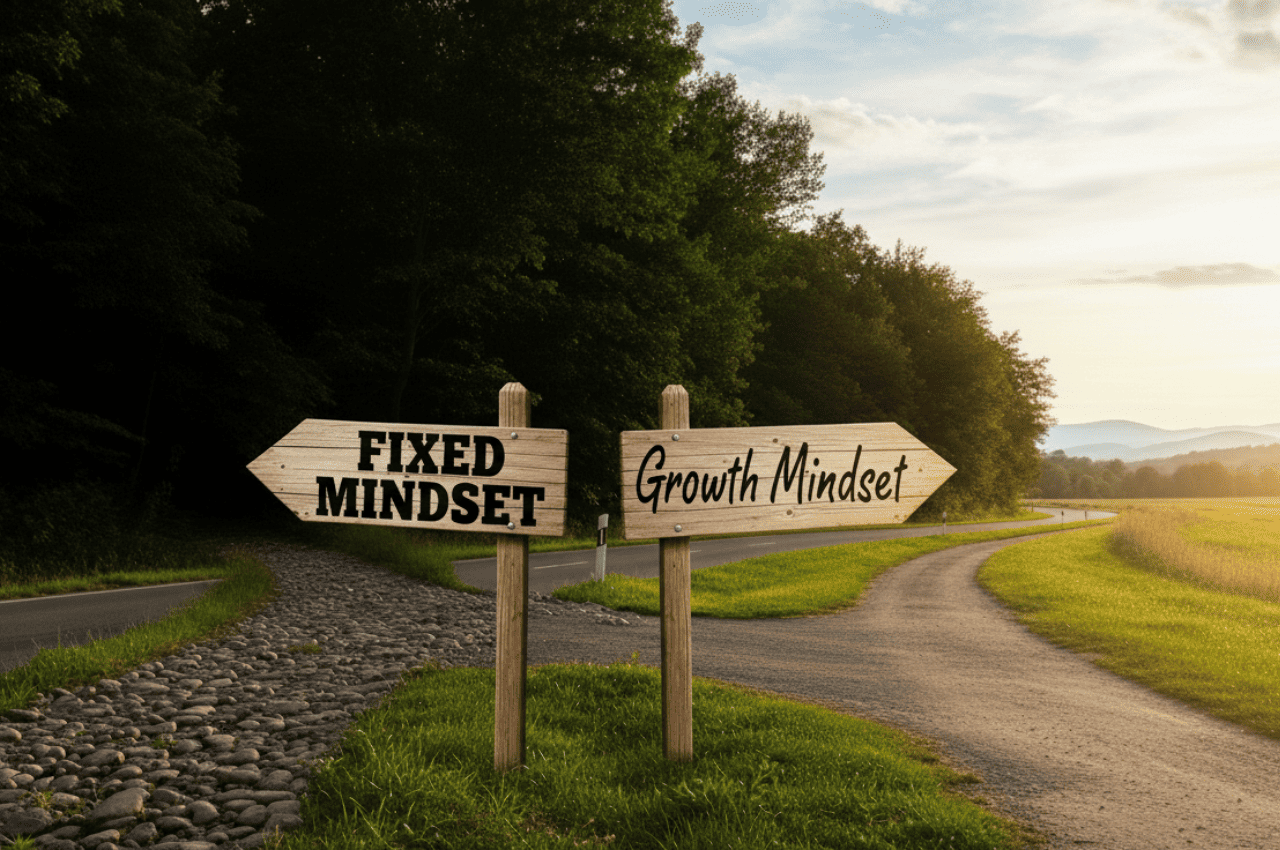
Life is full of obstacles. Some are external, like financial difficulties or career setbacks. Others are internal, such as self-doubt or fear of failure. Yet what often determines whether we rise above or stay stuck is not the size of the challenge, but the mindset with which we approach it.
According to research by psychologist Carol Dweck, author of Mindset: The New Psychology of Success, people generally operate with either a fixed mindset—believing abilities are static—or a growth mindset—believing abilities can be developed. Consequently, cultivating the right mindset can transform struggles into stepping-stones for growth.
Why Mindset Matters More Than Circumstances
To begin with, challenges are inevitable. However, people who adopt a growth mindset see difficulties not as barriers but as opportunities to learn. For example, when facing criticism, a fixed mindset interprets it as a personal attack, while a growth mindset sees it as valuable feedback.
This difference in perception influences actions. Over time, it can mean the difference between giving up and pushing through. A study published in Psychological Science found that students with a growth mindset outperformed peers academically, especially when confronted with obstacles. In other words, mindset shapes resilience.
Moreover, cultivating a growth mindset doesn’t only apply to academics or work. It enhances relationships, self-esteem, and even health outcomes. In How to Develop Emotional Intelligence in Daily Life, we saw how perspective impacts communication and empathy—two qualities that flourish when the mind is open to growth.
The Science Behind Growth and Resilience
On a neurological level, our brains are adaptable. Thanks to neuroplasticity, the brain rewires itself based on experience and practice. Thus, when someone embraces challenges instead of avoiding them, they literally strengthen new neural pathways for resilience.
Furthermore, studies conducted at Stanford University revealed that simply teaching students about neuroplasticity improved their academic performance and persistence. This demonstrates that understanding growth potential fuels perseverance.
Fixed Mindset vs. Growth Mindset in Action
To illustrate the contrast, consider these common situations:
- Failure: A fixed mindset says, “I’m not good at this.” A growth mindset says, “I need more practice.”
- Criticism: Fixed mindset reacts defensively. Growth mindset asks, “What can I learn?”
- Effort: Fixed mindset avoids challenges to protect self-image. Growth mindset views effort as essential for mastery.
Clearly, the way we interpret events has as much impact as the events themselves.
Practical Strategies to Develop a Growth Mindset
Although shifting mindset takes practice, it is absolutely possible. Below are strategies anyone can use:
1. Reframe Failures
Instead of labeling setbacks as proof of inadequacy, see them as lessons. Thomas Edison, for example, famously reframed his thousands of failed attempts at creating the lightbulb as steps toward discovery.
2. Replace Limiting Language
Words shape beliefs. Saying “I can’t do this” reinforces limitation. In contrast, adding “yet”—as in “I can’t do this yet”—signals openness to improvement.
3. Surround Yourself With Growth-Oriented People
Environment influences mindset. Therefore, choose to spend time with people who encourage growth, share constructive feedback, and celebrate progress.
4. Practice Self-Reflection
Taking time to reflect on challenges helps identify patterns in thinking. Journaling, as discussed in How to Journal for Clarity, Focus, and Emotional Balance, is an effective tool to recognize limiting beliefs and reframe them.
5. Embrace Challenges Gradually
Start with manageable difficulties to build confidence. Over time, tackling bigger challenges becomes less intimidating because resilience grows step by step.
The Role of Mindset in Professional Success
In the workplace, mindset influences performance more than raw talent. For instance, an employee with a fixed mindset may avoid taking on new responsibilities for fear of failure. On the other hand, one with a growth mindset views challenges as career-building opportunities.
Companies are beginning to recognize this. Many now prioritize mindset training, coaching, and workshops as much as technical skills. As reported in Harvard Business Review, organizations that cultivate growth-oriented cultures outperform competitors in innovation and employee engagement.
Overcoming the Inner Critic
Of course, shifting to a growth mindset does not mean silencing doubt entirely. The inner critic will still whisper: “You’re not ready.” The difference lies in responding with curiosity rather than fear.
One effective method is practicing self-compassion. Instead of harshly criticizing mistakes, acknowledge them with kindness. This reduces anxiety and creates space for improvement. As explored in How to Stop Self-Sabotage and Reach Your Goals, self-kindness often removes the very barriers that prevent growth.
A Mindset Shift That Lasts
Ultimately, mindset is not a one-time decision but a lifelong practice. Each challenge becomes a chance to choose: stay stuck or grow stronger. Importantly, it’s not about denying difficulty. Rather, it’s about recognizing that growth often happens on the other side of discomfort.
By consciously shifting thoughts, surrounding yourself with positive influences, and reframing failure, you build the resilience needed to face life’s inevitable ups and downs.
A Call to Action
This week, when you encounter a challenge—big or small—pause before reacting. Ask yourself: Am I viewing this through a fixed mindset or a growth mindset? That single question can be the first step toward transformation.
After all, challenges are not roadblocks but invitations to grow. And with the right mindset, even the toughest obstacles become opportunities.